Helical tieback anchors seem easy abstractly: torque them in, test, lock off, done. Any individual who has actually installed them on a commercial website recognizes the reality is actually messier. Dirt carries out not check out requirements, gain access to is hardly ever reasonable, as well as schedules press staffs in to shortcuts that turn up eventually as wall surface motion, water intrusion, or neglected exams. After two decades around commercial foundation stabilization as well as deep foundation repair, consisting of helical piles, resistance wads, as well as micropiles, I possess a running listing of blunders that set you back money and time. Lots of are avoidable with a few regimented examinations as well as a truthful read of the site.
This part goes beyond common assistance. It pays attention to persisting pitfalls I view in commercial helical tieback anchor installation as well as the useful methods to avoid them, with references to surrounding systems like commercial helical pile installation and commercial micro pile installation when the course carries across.
Why tiebacks fall short tests long just before they neglect the wall
Most tieback failings are tolerated when the layout expectations perform certainly not match industry situations. I have observed tiebacks developed for a sand lens that ended up being silty sand with a perched water level, and the workers struggled to fulfill the pointed out twist. The foreman incorporated extensions and maintained rotating, just to encounter a dense gravel seam that magnified the steel. A neglected lots examination complied with, then a late shuffle to upgrade the coils and also re-drill openings by means of completed inner parts pieces. None of that concerns the wall, all of it has to do with reading the ground.
Commercial helical tieback anchor setup depends upon 3 factors that can not be actually fabricated: exact soil records, correct support geometry for that soil, as well as installation that complies with the twist and alignment needs without improv under pressure. If among those three gets jeopardized, the exam port will certainly show it.
Incomplete or stale subsurface data
The worst blunders start prior to mobilization. Relying upon a singular boring or an old report can be costly. Dirt varies over brief spans, especially on internet sites with filler, electricals, or even previous restorative job. I have actually strolled ventures where the geotech's boring was actually taken 40 feet coming from the wall structure, throughout a power trough backfilled with crushed stone. The boring showed heavy granular soil. The wall surface edge was actually soft clay fill. The concept called for two-helix layers and also predicted 8 kip-ft per foot of embedment torque. The staff saw 3 to 4 kip-ft, then struck slick clay as well as stalled.
If the spending plan makes it possible for, add at least one confirmatory boring or even a couple of hand auger probings where the tiebacks are going to really go. On internal work, a 3-inch primary and also a portable compelling conoid penetrometer may inform you enough to change the coil size as well as space. If you can not include borings, insist on a layout along with contingencies: alternative coil arrangements, estimated torque arrays, and an examination support timetable to adjust the manufacturing plan. Calibration anchors are actually particularly important in layered grounds or even when groundwater fluctuates seasonally.
Poor helix option for the dirt regime
Every anchor installer possesses a beloved pile. That acquaintance aids efficiency, however it can easily likewise catch you. Large-diameter helices are actually certainly not regularly much better. In loosened to channel sands, big plates may churn without property tension. In stiff clay-baseds, way too many platters spaced too very closely may secure the shaft between helix bearings as well as induce capitulating torque.
A typical oversight is using a multi-helix arrangement along with insufficient space. The guideline is one to one as well as a half coil sizes in between layers on the very same shaft, along with the lead helix first right into seasoned strata. In overconsolidated clay-baseds, I frequently like far fewer, much larger helices with suitable space. In granular soils, a pattern of slightly much smaller plates can locate bearing without overstressing the steel. If the task blends clays and sand joints, consider a propitiatory captain helix or even a lead area that may be changed after an examination install.
Another error is actually stinting oxidation factors to consider when dirts are actually assertive. Commercial foundation repair commonly takes place in more mature cellars along with higher chlorides coming from deicing salts, poor water drainage, and rising and fall pH. If the corrosion examination reveals a requirement for more thick galvanization or even a propitiatory steel allocation, perform certainly not justify it away. Tieback anchors reside where you can easily not view them. The expense to upsize or specify hot-dip galvanized parts is typically petty relative to opening up a completed area 10 years later.
Misreading twist and the untrue comfort of a number
Torque relationship is actually a helpful resource. It is actually certainly not a promise. The relationship factor, Kt, varies widely with soil style, helix geometry, as well as installment approach. I have actually seen Kt values from as reduced as 6 to as high as 20 in the very same area, depending on whether the dirt was desiccated clay-based or clean sand. Address the indicated torque as evidence to be validated by load testing, not the only target that matters.
Two field actions contort twist readings. Initially, if the support is not lined up appropriately, it can tie in the hole and also make a friction spike that resembles bearing resistance. The electric motor groans, the scale goes up, but the helices are actually not engaging fully in the intended dirt level. Second, twist bars and also evaluates fall out of calibration or read in a hurry. If you feel an inaccurate high reading, pause and also recheck: back down a fourth twist, re-advance, as well as view whether twist constructs gradually. An irregular or even spiky track is actually a red flag.
On industrial projects, I talk to the crew to capture torque every half-foot for the final 3 to 5 feet as well as take note any kind of coating modifications or groundwater droplets on the tool. The notes take seconds as well as offer circumstance if an evidence examination underperforms. If the twist plateaued too early, the anchor may certainly not be serious sufficient or even the coil collection is unacceptable. Recording that prior to trimming makes all the difference.
Anchors placed in the incorrect dirt horizon
Tiebacks obtain ability coming from the helices birthing in skilled soil past the active wedge behind the wall. Getting beyond that block is actually as much a mathematical trouble as a deepness trouble. A regular error is aiming for depth instead of projecting the coil area along the genuine installation angle.
On a maintaining wall surface, the active block might stretch 0.6 H to 0.8 H behind the wall structure, depending upon backfill as well as water drainage. If you put up at a superficial slant to avoid electricals, you may end up along with a lengthy anchor that still properties within that block. The end result is a tieback that checks properly at reduced bunches yet creeps in the course of grip durations or programs extreme lock-off reductions over the first handful of weeks.
Always plot the anchor axis on the part pulling along with the wedge limitation, electricals, as well as basement pieces. When open space compels a shallow slant, add duration as well as opt for a coil setup made for the dirt past the block, not the universal dirt profile page. If the geometry will definitely certainly not enable you to get to competent ground without intersecting an electrical or even easement, this is where substitute units like micropiles or even commercial resistance pile installation can lug the load with tensioned brackets or even inner walers.
Overlooking groundwater as well as seasonal changes
Water is the quiet saboteur. Saturated soils reduce helpful stress as well as, through expansion, anchor capability. Delicate dirts that look tight in late summertime can act like slick goo in springtime. A tieback that latched off at 60 kips in October could sneak under the same bunch the following April if the water level rises right into the helix zone.
Simple paychecks help. Take note water gloss on spoil, check surrounding septic tanks, as well as document the day about damp periods. When suspicious, think about a traditional Kt and much larger helices or even create a testing procedure that includes a longer contain time to monitor creep. On insides, look at temporary dewatering in the course of installment so you can easily chair coils correctly. If constant high groundwater is present, corrosion goes up consequently performs the value of solitude sleeves near the wall surface to reduce potential seepage paths with the penetration.
Sloppy alignment and also inadequate preparing in the course of install
The ideal concept may not rescue an unsatisfactory installment position. Tiebacks need positioning in three dimensions: correct angle to converge the bearing layer, correct azimuth to prevent utilities, as well as straight admittance that stops eccentric filling of the wall hookup. I have actually viewed teams handhold a travel head to thread around a pipe. The support strayed, partitioned block cores, as well as placed a pointed hole. The wall structure layer later experienced unequal get in touch with, concentrating worry and spalling masonry.
Rig up a simple quick guide structure. Also a plywood theme along with a steel sleeve will always keep the starter area correct. For longer supports, a midspan support near the wall structure aids prevent bending over bum rap while torque is administered. Bending over during the course of installation may minimize the steel's recurring capability as well as appear later as a breakable breakdown under load testing.
Underestimating wall surface components as well as load transfer details
Tieback capacity does certainly not reside just in the dirt. The hookup concerns. For stonework or hollow-core wall surfaces, bearing platters need to have ample dimension as well as often squeezing struts to disperse bunch. In much older concrete, carbonation and rebar corrosion can easily make near-surface cement weak than the authentic sketches recommend. If home plate bites right into delicate product, you will certainly observe an exam reduce that seems like support creep however is really wall surface crushing.
Pay focus to the blockout dimension, embedment of any sort of couplers or sleeves, and also the requirement for grout behind home plate. In aggressive environments, indicate defensive limits as well as sealants around the penetration to reduce water transfer. A dripping penetration welcomes freeze-thaw damage and future foundation crack repair migraines, particularly in commercial cellars along with drywall finishes.
Skipping or abbreviating verification and efficiency testing
Time pressure kills great screening. On tiny work, the urge is actually to evidence examination an example and go on. That is actually unsafe when soils vary around the wall structure or even when support angles vary due to powers. A straightforward strategy goes a very long way: evidence examination every support to a minimum of 1.25 opportunities the style lots, keep at height for a lowest of 10 mins, as well as keep track of motion at each increment. For critical structures, include a few functionality exams to 1.5 to 2.0 times concept bunch along with longer hold periods to analyze creep.
Watch the bunch tissue as well as dial scale all together. If the bunch holds and activity boosts, that is actually creep. If the lots falls without considerable variation, check out the jack as well as determines prior to putting down the support. Keep a tranquility, check-list state of mind. Write down background temp, since thermal results on the jack and also steel can fool short tests.
Ignoring constructability in the layout phase
Designers occasionally define support spans and also perspectives that read through well in software program but hit fact. Interior columns, ductwork, and also home lines restrict gear setting. On a strict metropolitan website, you may need a low-clearance ride scalp, much shorter starter areas, as well as presented expansions. That decreases manufacturing and also increases the per-anchor price. If the timetable performs not accept that, quick ways creep in: lowered embedment, changed angles, insufficient extensions.
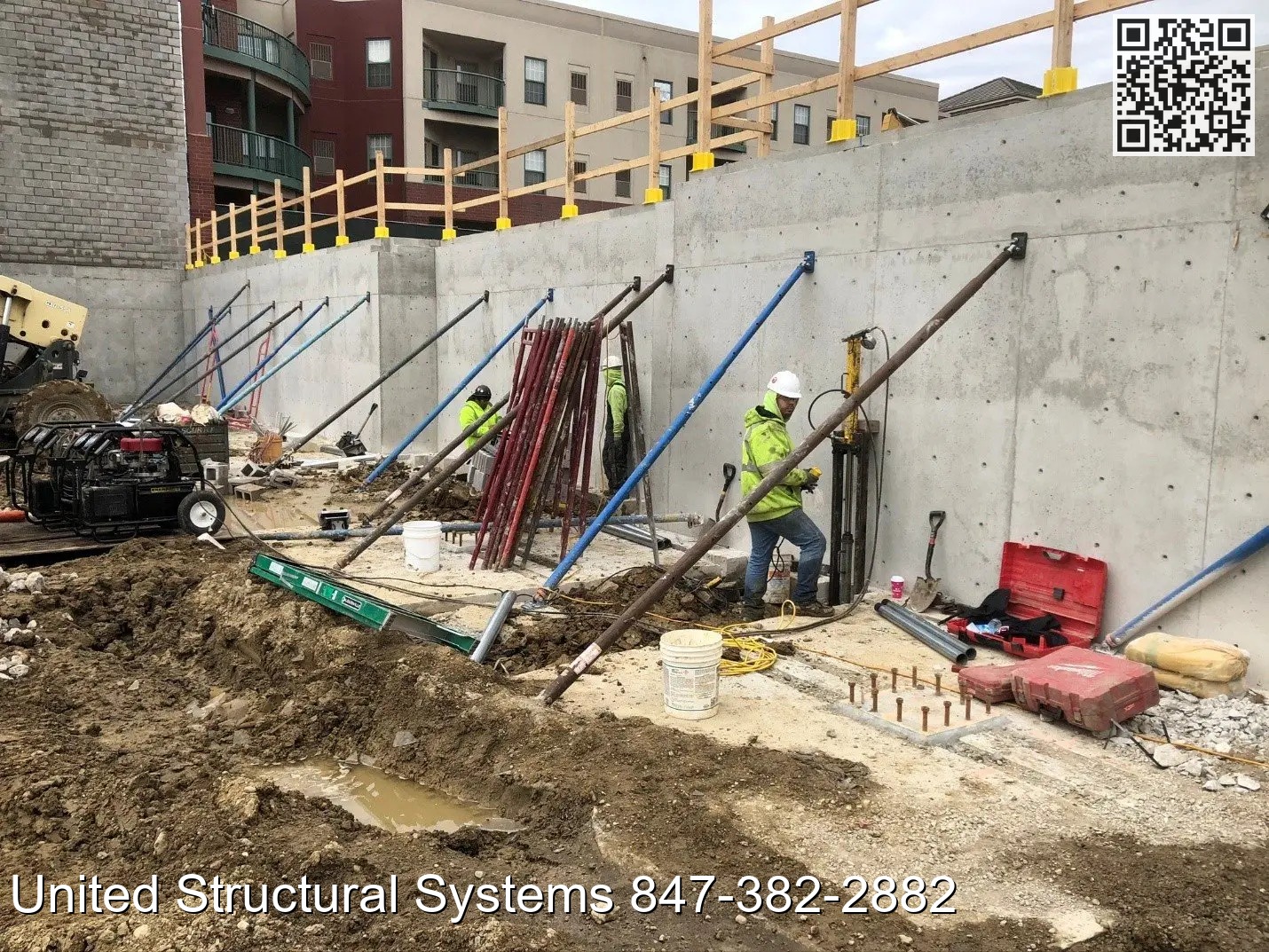
Bring the installer in to the conversation early. An industry stroll with the architectural engineer and geotechnical designer often produces smarter information: modifiable walers, alternate support space, or mixing commercial helical pile installation below the slab along with a tieback device to discuss bunches. I have used hybrid strategies where tiebacks take care of lateral while helical piles or resistance heaps support verticals from interior framing. The substitute might be over-stressing a solitary device to carry out both jobs.
Overreliance on one device when one more fits better
Helical tieback anchors beam in numerous conditions, but certainly not all. In quite dense crushed rocks and cobbles, the helices can reject just before arriving at style depth, and also the twist needed dangers twisting the shaft. In those soils, micropiles or pierced tiebacks might be actually much more trusted. If a sound regulation avoids percussive boring for micropiles, you can easily at times mix approaches: utilize helical anchors where greats dominate and change to micropiles in cobble zones. Being rigid about system commitment is actually a mistake.
Similar thinking administers when a wall needs both vertical as well as sidewise support. Commercial micropile installation may provide tension as well as compression along with minimal resonance when the internet site is sensitive. Commercial resistance pile installation operates well for vertical lots transactions where there is poor overhanging open space. Choosing the best tool becomes part of performing commercial foundation stabilization responsibly.
Neglecting rust defense and also long-lasting maintenance
Tiebacks usually sit in moist backfill along with sodiums, fertilizers, and periodic hydrocarbon spills. Mild steel will suffer over decades. When the venture anticipates a lengthy life span, define duplex protection where necessitated: hot-dip galvanized steel mixed with epoxy finish or cement encapsulation where codes demand it. On some municipal jobs, I have actually utilized plastic solitude sleeves along the shaft near the wall surface to reduce galvanic coupling to ingrained rebar.
If a property's maintenance planning overlooks the water drainage as well as surface area circumstances over the support zone, ability degrades. Motivate managers to maintain gutters, downspouts, as well as good grading. A great deal of structural foundation repair starts along with water, not steel. It is unglamorous suggestions, however it prevents call-backs.
Cutting sections on documentation
The fastest pathway to disputes is weak files. Daily logs that tape-record torque-depth profiles, drive scalp style and calibration date, dirt monitorings, as well as verification test leads make a clear history. Photographes of each support area prior to as well as after put up, including helical pile foundations the wall structure plate as well as sealant, pay dividends when a potential resident remodels as Find more info well as asks what is behind the drywall.
For office ventures along with lenders or even social error, clean documentation velocities commendations as well as payouts. It also enables the engineer of report to readjust styles on the fly along with self-confidence, as opposed to halting work with a full redesign when a couple of gradation supports would certainly suffice.
Overlooking the property's international behavior
Engineers in some cases examine lateral restriction alone. If the wall structure intends to relocate as a result of international negotiation, a tieback is going to share in that account. When the piece drops due to soft filler, tiebacks connect a moving wall structure to a moving floor, and also brand new fractures seem in another place. In those instances, combining tiebacks with helical piles or micropiles to re-level and also support interior beams generates a stable body. Commercial foundation repair is hardly ever a single-thread problem. A short structural testimonial of lots courses may record mismatches where a tieback would certainly be actually asked to do much more than withstand sidewise earth pressure.
Practical gates that stop most problems
A workers supervisor as soon as told me he preferred a five-minute ritual at the start as well as end of each support. He was right. It reduced our rework price by fifty percent on an occupied urban venture. These are actually the distilled actions that matter most.
- Before put in: verify perspective and azimuth with an easy jig, verify ground assumptions versus any kind of probe or even prior supports, check twist machinery as well as disk scalp pressure, and also verify components available matches the submittal. During put up: report twist every foot, decrease through anticipated bearing coatings, always keep bum rap bandaged near the wall, and also stop if torque spikes unevenly to re-evaluate. After set up: remove at the appropriate projection, clean the bearing surface area, mount home plate amount, verification exam to the planning along with measured has, as well as seal the infiltration versus water.
Keep it straightforward as well as regular. Most industrial crews can implement this without transforming the schedule.
When tiebacks intersect along with various other remedial work
Complex tasks hardly ever include one trade. Basement waterproofing, energy relocations, and interior fit-outs overlap with support work. The tieback infiltrations need to have control with membranes and insulation. If a blindside membrane layer is present behind a brand new wall structure, pre-plan sleeves as well as tapes. Coordinate with waterproofers on guides and sealers appropriate along with galvanized steel. Absolutely nothing strains client associations like a brand new leakage traced to an improperly secured support sleeve that punctures a membrane.
Foundation crack repair often areas in tandem with lateral stabilization. Tightening up a wall structure along with tiebacks can easily close splits, yet it performs not fix them. Epoxy treatment or urethane grouting could be required, depending upon whether the fracture is actually building or merely a water course. Series concerns: support to begin with, then mend cracks, at that point recover finishes. If negotiation provided, incorporate helical piles or even micropiles as needed to resolve the upright component.
Training the staff to read through the ground
Technical requirements may certainly not substitute area intuitiveness. The greatest installers have a sample of just how the twist ought to develop as well as what various soils odor and seem like. Wet, natural filler possesses a sour scent as well as smears; well-maintained sand really feels abrasive as well as drowses off the tool in dry out grains. The moment a team learns to associate these sensory signs with torque logs and also test outcomes, premium improves.
Invest a handful of hrs at the beginning of a project to adjust. Put in a number of test anchors, log properly, as well as compile the group around the proof exam. Chat with what the varieties mean. If you additionally put in helical piles, protection heaps, or even micropiles, reveal courses across units. The dirt does certainly not care what the product is actually named. It responds to successful worry, water drainage, as well as density.
Common failing tales, and what they teach
A mid-rise parking structure had a bowed cellar wall surface because of years of poor drain. The concept required helical tiebacks along with two 12-inch coils. The staff put up to twist yet locked off at fifty kips and also found 2 to 3 sixteenths of an inch of activity during the 10-minute hold. The assumption was actually gentle clay-based creep. The genuine cause was actually the wall structure plate bearing on a spalled cement face. Once our experts nicked as well as patched the confront with a high-strength repair mortar and also upsized home plate through 25 percent, tests passed with marginal action. Lesson: certainly not all "anchor motion" remains in the ground.
On another project, a historical brick front demanded tiebacks put in from the inside through a slender cellar corridor. The driver could possibly not sustain the pointed out 15-degree descending slant, thus he went for near-horizontal. The supports practically reached the concept length, yet the helices sat inside the active wedge. Within 3 months, parallel cracks increased near the tieback altitude. Our experts replaced the shallow supports along with a mix of deeper tiebacks as well as a couple of interior micropiles with a steel waler. Course: geometry defeats deepness when it concerns active block avoidance.
A third instance entailed commercial helical pile installation on internal columns paired with tiebacks along a bearing wall. The heaps went smoothly, but the tiebacks struggled through coatings of crushed rock. Twist increased unpredictably, and a ray turned. Changing to a drilled, grouted tieback with a small turning rig for that region conserved the schedule. Training: carry out not compel a helical solution by means of cobbles when an alternate is actually available.
Where specs often mislead
Several conventional specifications include quilt torque-to-capacity relationships and also universal hold opportunities. They work beginning factors, not gospel. In natural soils, creep actions matters greater than peak verification bunch. In rough soils, the size is even more sensitive to efficient tension and drain. If the spec performs not mention seasonal water table adjustments or deterioration classification, promote an addendum.
Similarly, some delegations neglect equipment grades, thread compatibility, as well as wall layer monotony. If the plate stretches under load, it will relax when you remove the port, resulting in frustrating lock-off values. A somewhat more thick platter or even a stiffener rib is actually a chump change that produces foreseeable results.
Bridging to neighboring systems without confusion
Clients usually hear a growth of terms: helical pile, helical tieback, resistance pile, micro pile, micropiles, tieback anchors, helical anchors. In basic phrases, piles largely manage upright tons, tiebacks manage lateral bunches in pressure. Helical piles and helical tiebacks discuss components, but their geometry and connections differ. Protection heaps are mounted in versus a building to establish capacity through edge bearing as well as friction, useful when expenses is restricted. Micropile installation entails pierced, grouted, typically steel-reinforced aspects that may take tension as well as compression in difficult soils.
On commercial foundation stabilization ventures, incorporating systems is actually certainly not a breakdown of organizing, it is actually typically the indicator of a tailored answer. A basement that has both side and also upright trouble may need helical tiebacks for the wall and also helical piles under interior shafts. If cobbles prevail, micropiles might switch out helicals. The most intelligent crews recognize each body's delightful area and limits.
Final thoughts from the field
Most costly errors in commercial helical tieback anchor installation track back to avoidable choices: relying on unfinished subsurface information, pushing a one-size-fits-all helix set, allowing twist analyses without circumstance, or skipping strong testing. Excellent process is certainly not complicated. It is actually a practice. Confirm the ground, pick geometry to match, install along with positioning technique, examination in all honesty, and also documentation carefully. When the site demands a different technique, prepare to pivot to micropiles or even resistance piles rather than increasing down on a battling method.
Do those things consistently and also tiebacks quit being actually a wager and also begin behaving like the reputable resources they are for commercial foundation repair and structural foundation repair. The wall stays, the client lodges delighted, and also you save the budget for the aspect of the job that appears in photos as opposed to behind drywall.
 Ask ChatGPT
 Ask Grok
 Ask Perplexity
 Ask Claude
 Ask Google AI
 Ask You